

Project Overview
案例概述
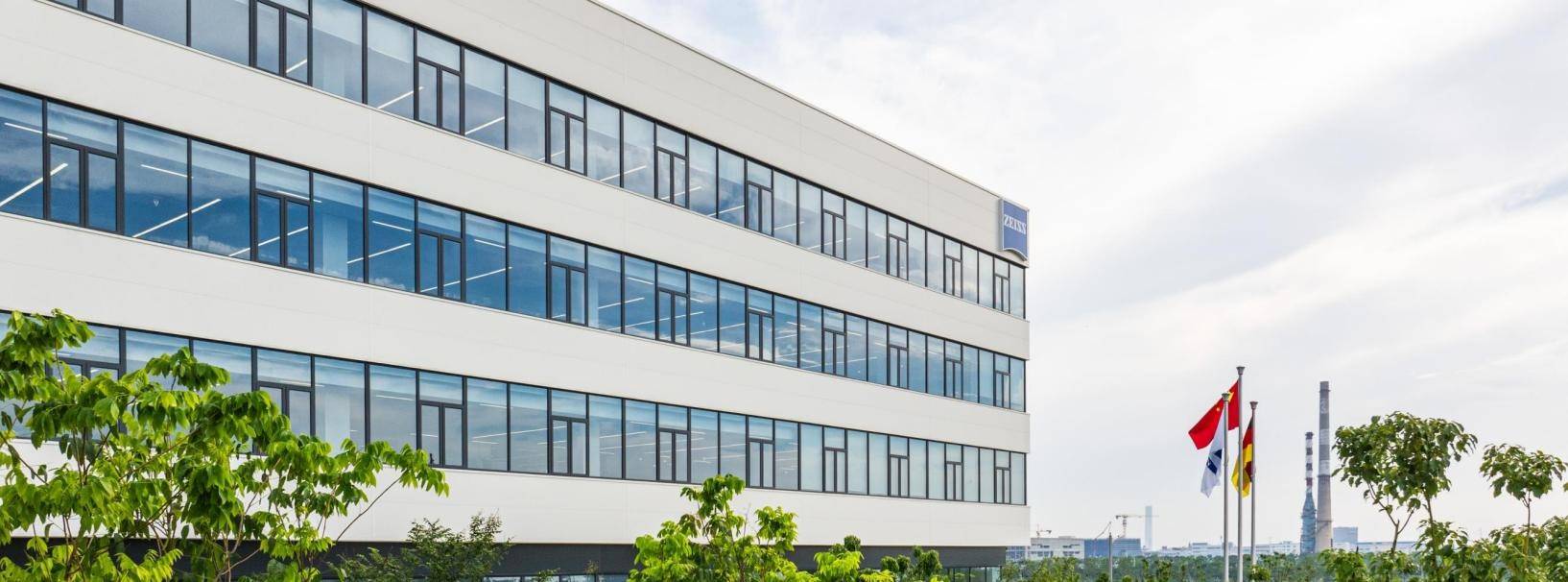
ZEISS Suzhou Site completed in April 2024,covers an area of 32,000 square meters. From its initial design
phase, the facility has embraced sustainable development principles, achieving
remarkable progress in energy efficiency, water conservation, and material
selection. It has been certified with LEED Gold, the highest honor in
environmental design.
蔡司苏州工厂于2024年4月落地建成,建筑面积3.2万方。设计初期即遵循可持续发展理念,在能源、节水和材料等方面成效显著,获能源和环境设计先锋LEED金级认证。
Low-E glass curtain walls were implemented to minimize energy
loss, while rooftop photovoltaic systems are projected to reduce annual carbon
emissions by 320 metric tons.
工厂采用LOW-E玻璃幕墙有效降低能耗损失,楼顶安装光伏发电系统,预计年减少碳排放320吨。
To achieve green and low-carbon operations while maintaining
constant temperature and humidity, the CWVS Property Management team has
implemented multiple energy-saving upgrades. The energy station's automated
control system underwent optimization, with existing equipment undergoing
programming adjustments and the installation of AI BOX units equipped with
built-in AI algorithms to enhance operational strategies and improve system
efficiency.
为实现绿色低碳运营及恒温恒湿环境要求,万物梁行物业团队推进多项节能改造,优化能源站自控系统,对现有设备进行程序编程调试,增加内置AI算法的AI BOX,优化运行策略、提高系统效率。
An integrated energy monitoring system combining IoT technology
and intelligent optimization algorithms has been introduced, providing users
with a safe, efficient, and comfortable working environment. This initiative
saves approximately 423,400 kWh of electricity annually, resulting in cost
savings of about 338,700 yuan.
同时增加能效监测系统,集物联网技术、智能优化算法于一体,为用户提供安全、高效、舒适的工作环境,全年可节省电量约42.34万度,节省资金约33.87万元。
Additionally, meeting room lighting utilizes innovative
millimeter-wave sensors with digital filtering algorithms that detect movement,
minor motions, and human presence in real-time, enabling automatic dimming
after occupants leave.
会议室照明采用“微动感应开启”的创新毫米波传感器,内嵌数字滤波算法,实时感应运动、微动和人体,实现人员离开后灯光自动关闭。
Office VRV air conditioning systems now feature centralized
control with preset operating cycles, time periods, and temperature settings,
significantly reducing manual interventions and energy consumption to promote
sustainable practices. It can save about 100,000 kilowatt-hours of electricity
and reduce carbon emissions by 100 tons per year.
办公室VRV空调加装集中控制,固定开启周期、时间段、设定温度等参数,减少手动干预并有效降低电耗,践行绿色低碳,每年可节省电量约10万度,减少碳排放100吨。
Company/Organization Profile
机构简介
Project Name: ZEISS Suzhou Site. ZEISS Suzhou Site, located at
No.28 Wusheng Road, Suzhou Industrial Park, will be completed and put into
operation in 2024.
项目名称:蔡司苏州工厂。蔡司苏州工厂坐落于苏州市工业园区吴胜路28号,于2024年建成投入使用。
With a construction area of approximately 32,000 ㎡, the facility stands 25 meters tall, featuring four above-ground
floors and one underground level, providing about 108 parking spaces.
工厂建筑面积约3.2万㎡,高25米,地上4层、地下1层,车位约108个。
It primarily produces advanced equipment including industrial
microscopes, surgical microscopes, precision online optical systems, and
mechanical measurement instruments, serving as ZEISS's high-standard R&D
and manufacturing unit in China.
主要生产工业显微镜、手术显微镜、精密在线光学和机械测量仪器等先进设备,是蔡司在中国高规格的研发与制造单元。
The ZEISS Suzhou Factory is committed to innovation,
high-quality production, and green manufacturing. Through collaboration with
partners, it accelerates digital transformation across the entire industry
chain while implementing eco-friendly practices. By leveraging localized
R&D and manufacturing capabilities, the factory drives high-quality
development in premium industries, becoming a reliable component of ZEISS's
global innovation, R&D, and advanced manufacturing ecosystem.
蔡司苏州工厂致力于创新、高质量、绿色生产,携手合作伙伴加速全产业链数字化转型,贯彻绿色环保理念,以本土研发和制造助力高端产业高质量发展,成为蔡司全球创新、研发、高端制造的可靠一环。
Project Outcome
项目成果
1. Scope and Content of Renovation: The energy station will
undergo optimization through upgrading the automation system programming,
integrating built-in AI algorithms, and adding an energy efficiency monitoring
system. For meeting room lighting upgrades, innovative millimeter-wave sensors
with micro-motion sensing technology will enable automatic lights turning off
when occupants leave. Office VRV air conditioning systems will be equipped with
centralized control featuring preset operating cycles, time periods, and
temperature settings.
创新应用:能源站改造优化自控系统编程、增加内置AI算法及能效监测系统;会议室照明改造采用“微动感应开启”的毫米波传感器,实现人员离开后灯光自动关闭;办公室VRV空调加装集中控制,固定开启周期、时间段、设定温度等参数。
2. Energy saving benefits: After the renovation, the energy
saving of HVAC is more than 12%, and the lighting in the office area and VRV
air conditioning effectively reduce energy consumption waste. The total annual
electricity saving is about 465,000 KWH, and the electricity cost is about
380,000 yuan.
节能效益:改造后暖通能源节能超12%,办公区照明及VRV空调有效降低能耗浪费,年节省电量约52万度,减少碳排放约400吨,节省电费约38万元。
3. Investment and return: The total renovation cost is 500,000
yuan, and the investment return cycle is about 1.5 years.
投资与回报:总改造费用50万元,投资回报周期约1.5年。
4. Implementation and quality: The construction is carried out
by qualified suppliers, and the sensors and AIBox are all innovative technology
products to ensure sensitive sensing, standard installation, safety and
reliability.
实施与质量:由合格供应商施工,传感器、AI Box均采用创新技术产品,确保感应灵敏、安装规范、安全可靠。
5. Safe and civilized construction: Strictly follow the EHS
construction control procedures of users, do a good job in technical briefing,
on-site finished product protection, personal protection of personnel, and LOTO
sign locking. While not affecting the site environment and normal production
work of users, complete the renovation safely and efficiently in strict
accordance with the schedule.
安全文明施工:严格按用户EHS施工管控程序,做好技术交底、现场成品保护、人员个人防护及LOTO挂牌上锁,在不影响现场环境和用户正常生产的前提下,按工期安全高效完成改造。
Project Highlights
项目亮点
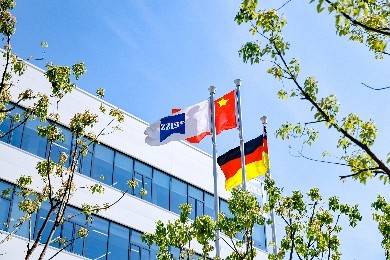
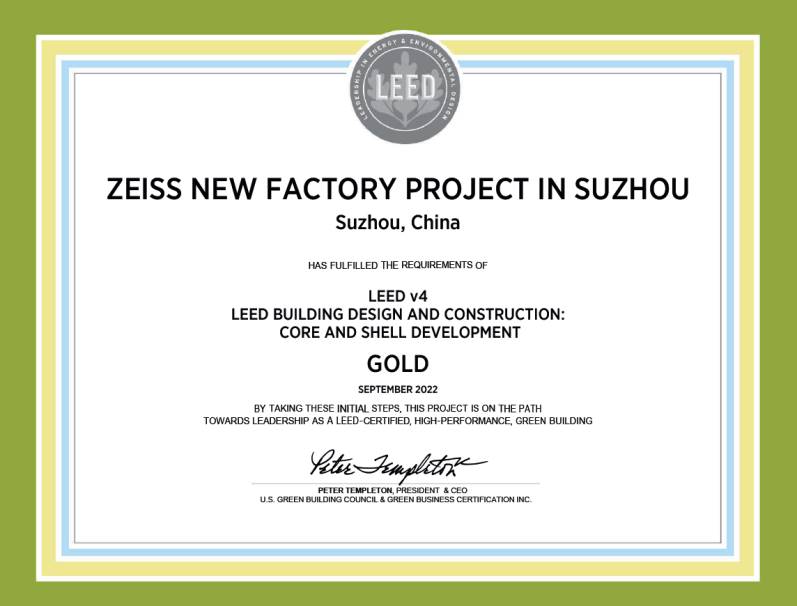
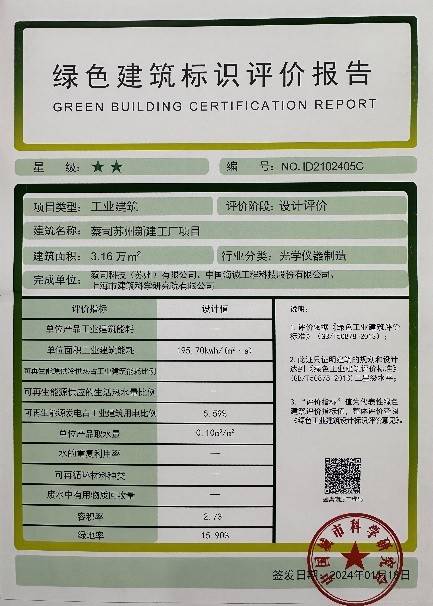
ZEISS Suzhou Site has been certified with LEED Gold for Energy
and Environmental Design Leadership and the Green Building Two-Star
certification from the China Academy of Urban Sciences.
蔡司苏州工厂获能源和环境设计先锋LEED金级认证、中国城市科学研究院绿色建筑二星认证。
The entire facility utilizes LOW-E glass curtain walls to effectively
reduce energy loss. Indoor lighting has achieved 100% LED. A photovoltaic power
generation system has been installed on the roof.
全厂采用LOW-E玻璃幕墙降低能耗损失,室内照明实现100%LED,楼顶全覆盖安装光伏发电系统,年发电量超40万度。
Cutting-edge technologies have been innovatively employed,
including AI algorithms to optimize the energy station's automated control
system.
创新使用前沿技术,内置AI算法优化能源站自控系统。
Project Implementation
项目实施
1. The property service team systematically improves the property
service experience from three dimensions: innovative technology products,
service processes and space operation, while ensuring stable production
environment, meeting customer system requirements and ensuring employees'
physical comfort. The team seeks to pursue energy-saving spaces and green space
utilization.
项目物业团队在保障生产环境稳定、满足客户体系要求且员工体感舒适的前提下,从创新技术产品、服务流程、空间运营三个维度系统提升物业服务体验,寻求节能空间、追求绿色空间使用。
2. Innovative Technology Solutions: The system incorporates
AI-powered algorithm calculators like the AIbox and microwave sensors to
optimize energy station automation, identifying energy-saving thresholds while
meeting client requirements for production environments. An intelligent energy
management system governs the entire building's mechanical and electrical systems.
This integrated solution combines Building Automation (BA) technology, energy
consumption monitoring, IoT integration, and smart optimization algorithms,
delivering comprehensive management of energy efficiency, operational control,
equipment maintenance, and building-wide conservation.
创新技术产品:引入AI Box智能算法计算器、微波传感器等实现能源站自控系统智能寻优,在满足生产环境体系要求的前提下寻找节能边界;引入智慧能源管控系统管控整个建筑机电系统,该系统集BA楼控技术、能耗监测技术等多技术于一体,具备多项管理和节能控制功能。
3. It creates safe, efficient, and comfortable workspaces while
reducing energy waste, lowering operational costs, and enhancing daily building
management efficiency.
可为用户提供安全、高效、舒适的工作环境,降低大楼能量损耗,节省运行费用,提高楼宇日常运维效率。
4. Enhanced Air Conditioning System Control: Regularly clean air
conditioner filters and condensate pans (recommended monthly), clean air ducts
quarterly, and entrust third-party agencies to conduct semi-annual system
inspections with publicized reports to prevent bacterial growth and duct
contamination.
强化空调系统管控:定期(建议每月1次)清洗空调滤网、冷凝水盘,每季度清洁风道,委托第三方机构每半年进行一次空调系统检测并公示报告,避免细菌滋生和风道污染。
5. Intelligent Regulation Based on Monitoring Data:
Automatically activate fresh air systems to increase ventilation when CO₂ concentration exceeds 1000ppm; activate built-in HEPA filter
modules during smoggy days, and supplement air purifiers in public areas if
necessary.
根据监测数据智能调节:当CO₂浓度高于1000ppm时,自动联动新风系统加大换气量;雾霾天启动空调内置的高效过滤模块(如HEPA滤网),必要时在公共区域补充空气净化器。
6. Air Conditioning Service Experience: Aimed at "precision
control + response efficiency + energy balance," the service should
balance "user comfort" and "operational costs" through
standardized processes and intelligent management. Establish tiered service
standards: Define temperature control parameters: Maintain cooling temperatures
at no lower than 26℃ in summer and heating
temperatures at no higher than 20℃ in winter. Adjust
operating modes three days in advance based on seasonal changes (e.g.,
activating fresh air mode during transitional seasons).
空调服务体验:以“精准调控+响应效率+节能平衡”为目标,兼顾“用户舒适度”与“运营成本”。制定分级服务标准:明确夏季制冷温度不低于26℃,冬季制热不高于20℃,根据季节变化提前3天调整运行模式(如过渡季启用新风模式)。
7. Prioritize service levels: synchronize office air
conditioning operation hours with tenant working hours (e.g., 8:00-20:00), with
overtime requests requiring online applications submitted two hours in advance.
Ensure public areas (lobbies, elevator lobbies) maintain comfortable
temperatures (22-24℃) 24/7.
区分服务优先级:办公区空调运行时间与租户工作时间同步(如8:00-20:00),加班需求需提前2小时通过线上渠道申请;公共区域(大堂、电梯厅)24小时维持舒适温度(22-24℃)。
8. Improve fault response efficiency: Implement a
"15-30-60" response mechanism: dispatch engineers within 15 minutes
of receiving air conditioning repair requests, identify fault causes within 30
minutes, resolve minor issues within 60 minutes, and provide written solutions
with estimated repair times for complex faults (e.g., unit failures) within 4
hours.
提升故障响应效率:建立“15-30-60”响应机制:接到空调故障报修后,15分钟内派工程师到场排查,30分钟内明确故障原因,一般性故障60分钟内修复,复杂故障(如主机故障)需出具书面解决方案并告知预计修复时间(不超过4小时)。
9. Conduct preventive maintenance: Perform monthly inspections
of air conditioning units, fan coil units, valves, etc., record operational
parameters (e.g., pressure, current), establish equipment records, and replace
aging components (e.g., solenoid valves, sensors) in advance to reduce failure
rates.
预防性维护:每月对空调主机、风机盘管、阀门等设备进行巡检,记录运行参数(如压力、电流),建立设备档案,提前更换老化部件(如电磁阀、传感器),降低故障率。
10. Comparison Before and After Implementation: Before
renovation, energy consumption was high, equipment operation was extensive, and
there was no intelligent monitoring; after renovation, intelligent technologies
such as AI algorithms and sensors are adopted, energy consumption is
significantly reduced, equipment operation efficiency is improved, and the
working environment is more comfortable and energy-saving.
实施前后对比:改造前,能耗较高,设备运行粗放,无智能监测;改造后,采用AI算法、传感器等智能技术,能耗显著降低,设备运行效率提升,工作环境更舒适节能。
Project Impact & Sustainability
项目影响力、可推广性与可持续性
Continuously Enhancing Property Service Experience: User-Centric
Approach with Standardization and Iteration. Improving property services is a
long-term process that requires establishing a
“feedback-analysis-improvement-validation” cycle.
持续提升物业服务体验:以“用户需求为导向,以标准化+迭代为手段”。物业服务体验的提升是长期过程,需建立“反馈-分析-改进-验证”的循环机制。
1. Standardized Service System: A Property Service Standards
Manual defines processes, response times, and quality benchmarks for security,
cleaning, engineering, and customer service. Examples include: 24/7 security
with 100% visitor registration, twice-daily public area cleaning with waste
cleared within 2 hours, and customer calls answered within 3 rings with queries
responded to in 10 minutes.
建立标准化服务体系:制定《物业服务标准手册》,明确安保、清洁、工程、客服等岗位的服务流程、响应时效与质量标准。例如:安保岗24小时值守,外来人员登记率100%;清洁岗每日清洁公共区域2次,垃圾清运不超过2小时;客服岗电话响铃3声内接听,咨询问题10分钟内回复。
2. Training and Feedback Mechanisms: Monthly training sessions
(e.g., service etiquette, emergency response) and quarterly performance
evaluations are linked to incentives. Tenant feedback is collected through
surveys, meetings, and daily communication, categorized into
immediate/short-term/long-term actions, with progress shared via official
channels.
强化培训与反馈机制:每月组织服务礼仪、应急处理等培训,每季度开展服务质量考核,结果与绩效挂钩。通过用户座谈会、线上问卷及日常沟通收集需求,形成清单并分类推进(立即解决/短期优化/长期规划),明确责任与时限,改进后通过公众号或邮件向用户同步进展。
3. Technology-Driven Efficiency: A property management
mini-program enables online requests, complaints, payments, and bookings with
real-time tracking. Smart systems (facial recognition, AI video analysis, IoT
sensors) enhance security and enable predictive maintenance.
技术赋能提升服务效率:上线物业服务小程序,集成报修、投诉、缴费、预约等功能,实现服务线上化与进度可视化。引入智慧安防系统(如人脸识别门禁、AI行为分析)及IoT设备,实现安全管控与设备运行状态远程监控,提升管理效率与故障预警能力。
4. These measures shift services from passive response to
proactive management, ensuring consistent quality through standardization while
continuously adapting to user needs.
通过以上措施,推动物业服务从“被动响应”转向“主动管理”,以标准化保障基础体验,以个性化满足用户需求,实现服务品质持续迭代。
(Using AI translation)
(使用AI翻译)
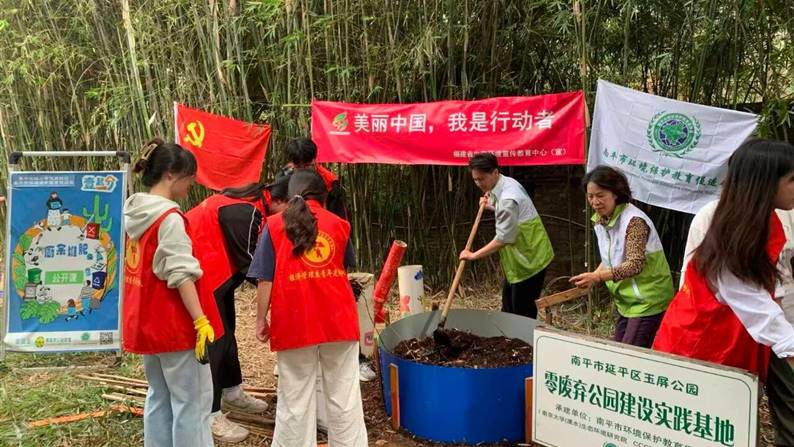
南平零废弃建设等案例,在联合国COP30大会上向全球发布!
12-04 · 来源:福建南平环境 · 作者:福建南平环境

上海市第六人民医院入选《2025美丽中国 · 绿色空间使用者典型案例集》
12-04 · 来源:徐汇生态环境 · 作者:徐汇生态环境
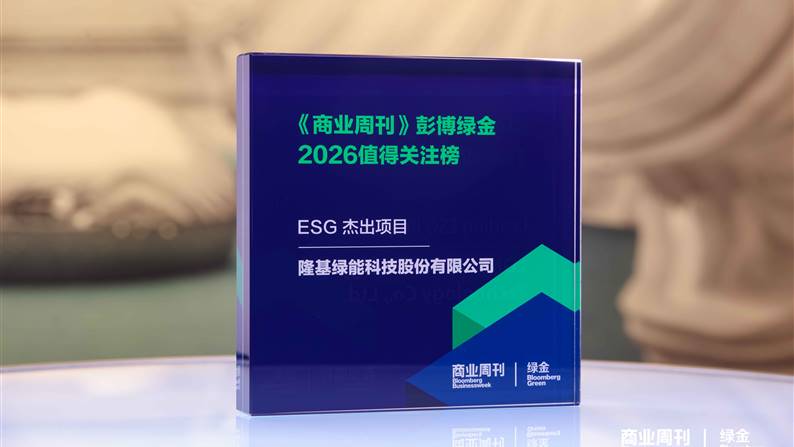
隆基入选彭博绿金2026值得关注榜“ESG杰出项目
12-04 · 来源:隆基绿能 · 作者:隆基绿能
