

Project Overview
案例概述
Sunjiatuan Primary School of Weihai City is located in
Sunjiatuan Sub-district, Huancui District, Weihai City, Shandong Province.
Since 2022, adhering to the educational philosophy of "Embracing All
Rivers with a Broad Mind and Sailing Far and Wide", the school has
leveraged its geographical advantage of being adjacent to the sea to create a
blue-green marine ecological green space.
威海市孙家疃小学位于山东省威海市环翠区孙家疃街道,自2022年起,以“海纳百川,扬帆远航”为育人理念,立足临海地域优势,打造蓝绿海洋生态绿色空间。
The school has integrated the concepts of marine ecological protection
and marine technology into the minds of teachers, students and parents by
developing school-based courses such as The Sea Accompanies Me. It has also
incorporated the concepts of marine ecology and green environmental protection
into the campus space and daily teaching through the construction of campus
environments like the marine "turning waste into treasure" ecological
theme corridor, the marine oil painting theme pocket park, and the marine
ecological plantation.
学校通过开发《大海伴我行》等校本课程,将海洋生态环保、海洋科技理念植入师生家长心中;通过建设海洋蓝色变废为宝生态主题长廊、海洋油画主题口袋公园、海洋生态种植园等校园环境,将海洋生态与绿色环保理念融入校园空间与日常教学。
Moreover, the school has organized teachers and students to
carry out public welfare activities of cleaning the marine beach and promote
marine protection knowledge in communities, driving families and social forces
to jointly participate in ecological protection. In addition, it has stimulated
students' enthusiasm for environmental protection through innovating the
"Little Starfish" evaluation system and adopting a practical incentive
mechanism.
通过组织师生开展海洋净滩公益行动、进社区宣讲海洋保护知识,带动家庭与社会力量共同参与生态守护;通过创新“小海星”评价体系,以实践激励机制,点燃学生环保热情。
By 2025, the school has carried out more than 100 various
ecological and environmental protection activities, attracting over 10,000
teachers, students and parents to participate. Students have independently
created nearly 1,000 works with the theme of marine protection, and
independently built ecological green spaces such as the shell carving
ecological corridor and the marine oil painting library. The school has
successively been awarded titles such as "National Marine Awareness
Education Base", "National Marine Science Popularization Education
Base" and "The First Batch of Marine Culture Education Pilot Schools
in Shandong Province", and has gradually formed a replicable and
promotable practical model of campus marine ecological education.
截至2025年,学校累计开展各类生态环保活动上百场,吸引上万名师生及家长参与;学生自主创作海洋保护主题作品近千幅,自主打造贝雕生态长廊、海洋油画图书馆等生态绿色空间。学校先后获评“全国海洋意识教育基地”“全国海洋科普教育基地”“山东省首批海洋文化教育领航校”等,逐步形成可复制、可推广的校园海洋生态教育实践模式。
Company/Organization Profile
机构简介
Sunjiatuan Primary School of Weihai City covers a total area of
3.36 hectares, with a total construction area of 1.07 hectares. It is equipped
with comprehensive facilities including teaching buildings, art buildings,
all-weather sports grounds, and a marine oil painting library, and its green
coverage rate reaches over 70%.
威海市孙家疃小学总占地面积3.36公顷,总建筑面积1.07公顷,配置教学楼、艺术楼、风雨操场、海洋油画图书馆等完善设施,绿化面积达70%以上。
Upholding the educational philosophy of "Embracing All
Rivers with a Broad Mind and Sailing Far and Wide", the school takes
advantage of its regional characteristic of being adjacent to the sea, regards
marine culture as the core tone of the campus, focuses on marine ecological
education, and builds a green campus featuring "harmony between humans and
the sea".
学校秉持“海纳百川,扬帆远航”育人理念,立足临海地域特色,以海洋文化为校园核心基调,聚焦海洋生态教育,打造“人海和谐”的绿色校园。
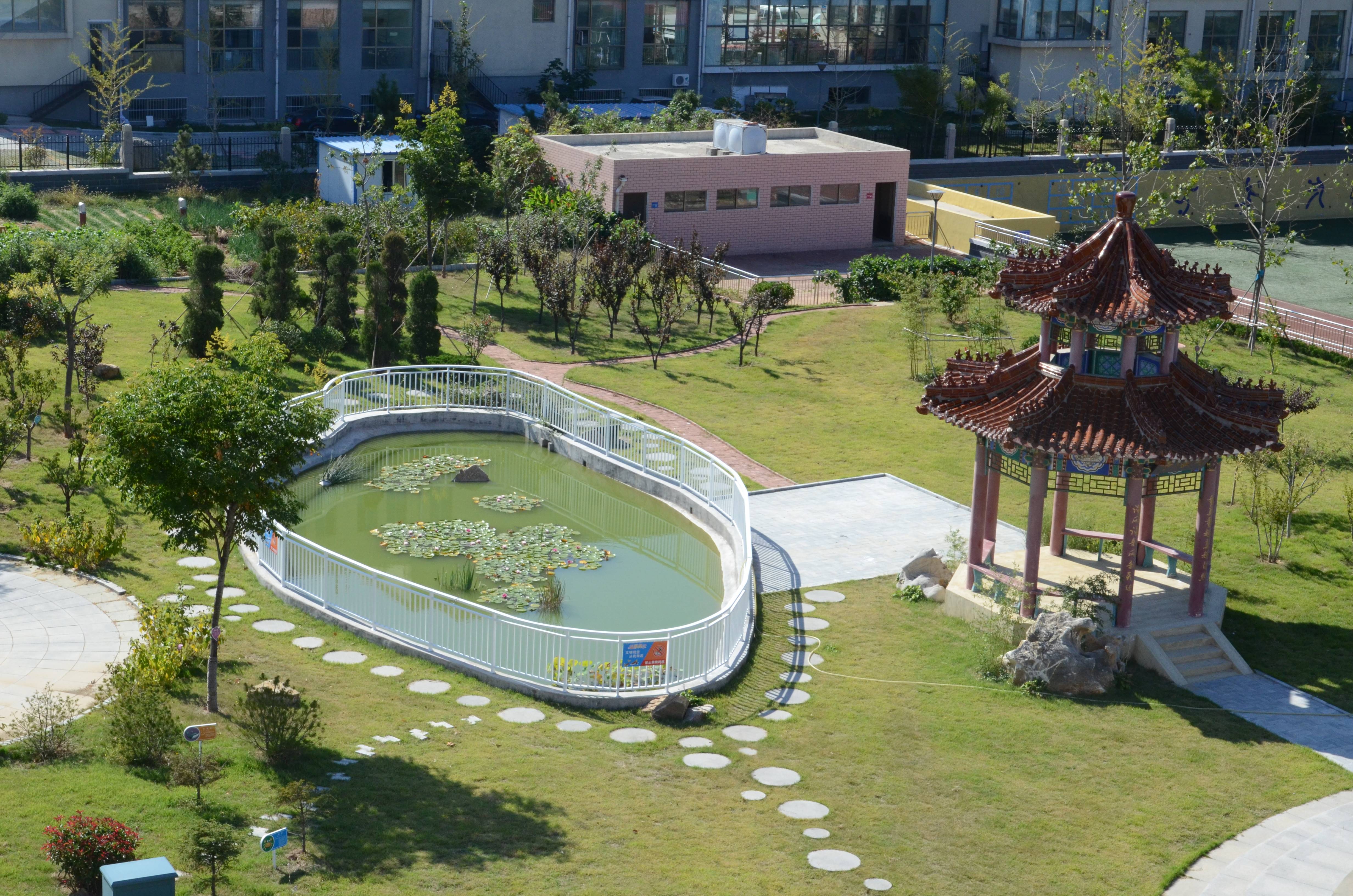
On campus, there are not only natural ecological spaces such as
ecological plantations, ecological fish ponds, and ecological gardens, but also
a comprehensive ecological environment covering courses, activities, and
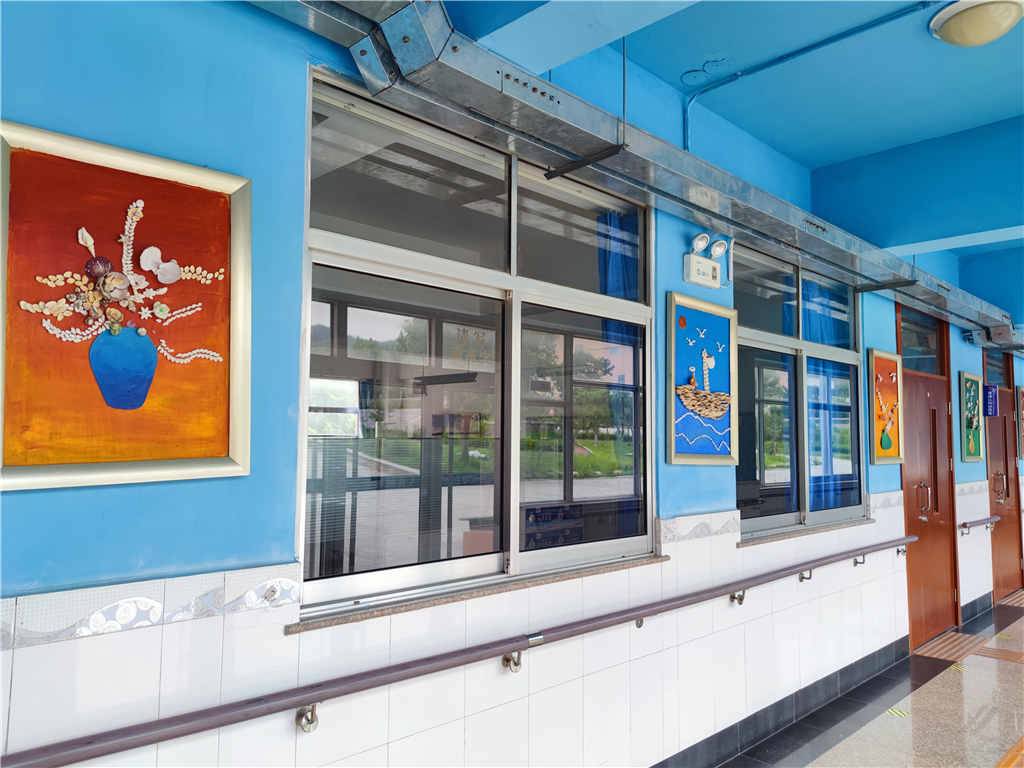
spaces. It has distinctive green spaces including the themed ecological
corridors of "Sea Fun, Sea Breeze, and Sea Charm", a shell carving
exhibition corridor, and a marine library, as well as environmental protection
facilities like waste classification equipment and a "turning waste into
treasure" practical workshop.
校内设有生态种植园、生态鱼塘、生态花园等自然生态空间,构建涵盖课程、活动、空间的全方位生态环境,拥有“海趣、海风、海韵”主题生态长廊、贝雕展廊、海洋图书馆等特色绿色空间,配备垃圾分类设施、变废为宝实践工坊等环保设施。
Relying on the collaborative mechanism of home, school, and
society, the school carries out ecological practice activities in cooperation
with public welfare organizations and communities. Its marine ecological
protection cases have been reported by mainstream media, making it a benchmark
for campus ecological education in the region.
依托家校社协同机制,联合公益机构、社区开展生态实践活动,其海洋生态保护案例获主流媒体报道,成为区域内校园生态教育标杆。
Project Outcome
项目成果
1. Remarkable Results in Resource Recycling and Utilization:
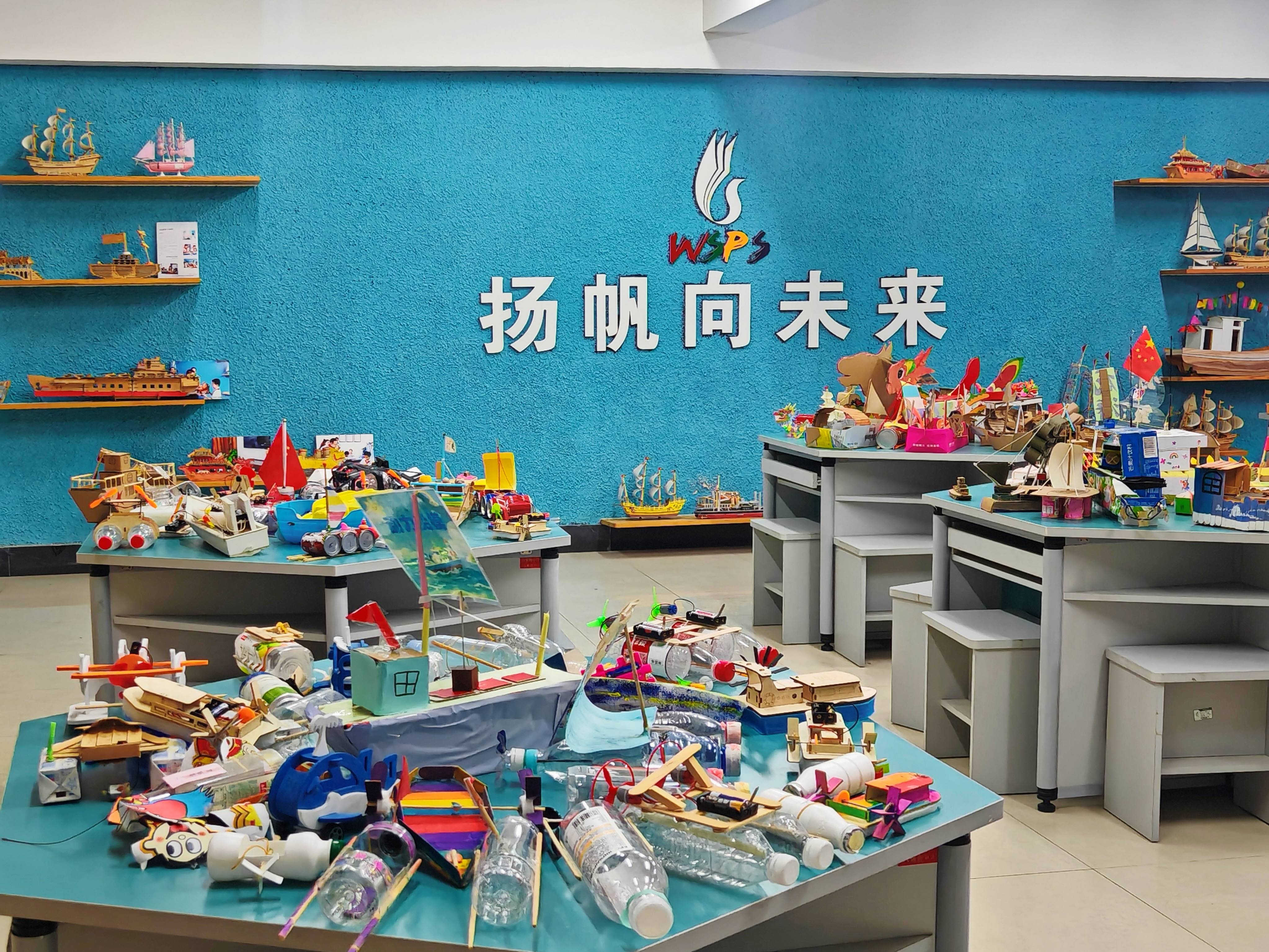
Students have made over 1,000 shell carving artworks and ship models using
waste materials such as seashells, popsicle sticks, and express boxes. The
utilization rate of recyclable materials (paper, plastic, metal, etc.) on
campus has increased by 95%, reducing solid waste emissions by approximately 2
tons per year.
资源循环利用成效显著:学生累计利用贝壳、雪糕棍、快递盒等废弃物制作贝雕艺术品、船模超千件,校园可回收物(纸张、塑料、金属等)利用率提升95%,减少固体废弃物排放约2吨/年。
2. Expanded Public Participation and Implementation of Special
Projects: Since 2022, more than 100 environmental protection practice activities
have been carried out on and off campus, including over 30 public welfare beach
cleaning activities, with a total of more than 10,000 participants, including
teachers, students, parents, and community residents. The school has
successfully joined the Marine Seedling Project of the China Marine Development
Foundation, and the Ecological Civilization Construction Publicity and
Education Project of the Weihai Municipal Bureau of Ecology and Environment has
also been implemented in the school. In the future, the school will deepen
ecological education practice with the theme of "Exquisite Campus · Blue
Non-Waste Harbor".
公众参与规模扩大与专项项目落地:自2022年以来,开展校内外环保实践活动上百场,其中净滩公益活动30余场,累计参与师生、家长、社区居民超1万人次;学校成功加入中国海洋发展基金会海洋育苗项目,威海市生态环保局生态文明建设宣传教育项目落地,后续将以“精致学园・蓝色无废港湾”为主题深化生态教育实践。
3. Dual Improvement of Teachers' and Students' Environmental
Literacy and Professional Competence: Students have independently created
nearly 1,000 oil paintings with the theme of marine protection, among which
more than 100 high-quality works have been exhibited, and several works have
been published in newspapers and periodicals such as China Children. One
student won the gold award in the national bilingual speech contest with the
theme of ecological environmental protection, and 4 teachers and students won
the first prize in the national "I Love the Ocean" speech contest.
Teachers have outstanding professional abilities, with a winning rate of over
95% in various ecological education and environmental protection
curriculum-related competitions at the provincial, municipal, and district
levels.
师生环保素养与专业能力双提升:学生自主创作海洋保护主题油画近千幅,100余幅精品参展,多篇作品发表于《中国少年儿童》等报刊,1名学生获全国双语演讲大赛生态环保主题金奖,4名师生在全国“我爱海洋”双讲比赛中获一等奖;教师在省市区各级生态教育、环保课程相关比赛中获奖比例超95%。
4. Outstanding Achievements in Curriculum Construction: The
school has developed 12 ecological courses, including How Much Do You Know
About the Sea, Marine Shell Carving, and Marine Ship Model. The environmental
research courses developed by teachers have won awards in provincial
competitions, and several cases have won municipal awards. Relying on the
courses and activities, the "Little Sea Baby Environmental Protection
Volunteer" team has been established. The team participates in public
welfare services such as community greening maintenance and waste classification
guidance more than 20 times a year, helping to improve the quality of the
living environment in surrounding communities and promoting the extension of
green concepts from campus to society.
课程建设成果突出:开发《大海知多少》《海洋贝雕》《海洋船模》等生态课程12门,教师开发的环保研学课程在省级比赛中获奖,多个案例获市级奖励;依托课程与活动组建的“小海娃环保志愿者”队伍,年均参与社区绿化维护、垃圾分类指导等公益服务20余次,推动绿色理念从校园向社会延伸。
5. Enhanced School Brand Influence: The school's related
activities have been featured on platforms such as Xuexi Qiangguo (Learning
Power). More than 30 schools have visited the school for exchange and learning.
The China Marine Development Foundation has donated a marine library to the
school, further improving the campus green education space and laying a solid
foundation for the implementation of special projects and themed practices.
学校品牌影响力提升:学校相关活动登上学习强国等平台,吸引30余所学校到校交流学习;中国海洋发展基金会为学校捐赠海洋图书馆,完善校园绿色教育空间,为专项项目落地与主题实践开展奠定坚实基础。
Project Highlights
项目亮点
Centered on the creation of blue-green spaces, this project aims
to build a "Blue Ocean and Colorful Campus". On one hand, it deeply
integrates the "environmental blue" and "ecological green".
The entire campus culture is built around eco-friendly works created by
students using waste materials, with the concepts of "turning waste into
treasure", ecological environmental protection, and "green first"
reflected everywhere. This transformation turns waste into ecological landscape
spaces that are both ornamental and educational.
本项目以蓝绿空间打造为核心,构建“蓝海多彩校园”:一方面,将环境蓝、生态绿深度融合,校园文化均以学生利用废旧物品制作的生态环保作品打造,处处体现变废为宝、生态环保、绿色先行的理念,让废弃物转化为兼具观赏性与教育性的生态景观空间。
On the other hand, it creates dynamic experiential scenarios.
Operable practice areas are set up within the green spaces, allowing children
to participate at any time and see relevant elements everywhere. This enables
the "blue of the sea" and "green of ecology" to be deeply
integrated into their daily growth, thereby activating the educational function
of the campus space.
另一方面,打造动态化体验场景,绿色空间内设置可操作实践区域,孩子随时能参与、随处看得见,让大海的蓝色、生态的绿色深入融入成长日常,激活空间教育功能。
Project Implementation
项目实施
1. Implementation Plan: Centering on Green Spaces to Build a
"Three-Dimensional Integrated" Promotion System. Focused on the goals
of "creating blue-green spaces, spreading marine environmental protection
concepts, and promoting waste recycling", this project has developed a
three-dimensional implementation plan of "space transformation –
curriculum integration – practice extension" to ensure the green spaces
fully meet the needs of ecological education.
实施方案:以绿色空间为核心,构建“三维一体”推进体系。项目围绕“打造蓝绿空间、传播海洋环保理念、推动废弃物循环利用”目标,构建“空间改造—课程融合—实践延伸”三维实施方案,确保绿色空间贴合生态教育需求。
2. Space Transformation Dimension: Focuses on idle areas and
core sites on campus. It reconstructs functions through waste utilization to
create green spaces that combine educational and practical value. Curriculum
Integration Dimension: Integrates the "zero-waste concept" and marine
ecological knowledge into school-based courses, realizing the idea of
"space as a curriculum". Practice Extension Dimension: Carries out
activities based on on-campus spaces and extends them to off-campus sea areas and
communities, forming a closed loop for ecological protection.
空间改造维度聚焦校园闲置区域与核心场地,通过废物利用重构功能,打造教育性与实践性兼具的绿色空间;课程融合维度将无废理念、海洋生态知识融入校本课程,实现“空间即课程”;实践延伸维度依托校内空间开展活动,并延伸至校外海域与社区,形成生态保护闭环。
3. Implementation Process: Three-Stage Progression to Deepen the
Construction and Application of Green Spaces (I) Foundation Construction Stage
– Building the Green Space Framework and Laying the Foundation for Concept
Dissemination. The school clarified the needs of ecological education through
questionnaires for teachers and students and interviews with parents. Combined
with the regional characteristic of being adjacent to the sea, it determined
the space construction direction of "marine theme + turning waste into
treasure". It formulated the Blue-Green Ecological Space Construction Plan
and divided the work into three core modules: "ecological corridor
development", "practice site construction", and "evaluation
system establishment". After sorting out existing campus space resources,
it selected teaching building corridors and idle classrooms as the locations
for the ecological corridor and practice sites.
实施过程:三阶段递进,深化绿色空间建设与应用(一)基础建设期——搭建绿色空间框架,奠定理念传播基础。通过师生问卷、家长访谈明确生态教育需求,结合临海地域特色,确定“海洋主题+变废为宝”的空间建设方向,制定《蓝绿生态绿色空间建设方案》,划分“生态长廊打造”“实践场地建设”“评价体系搭建”三大任务模块;梳理校园既有空间资源,选定教学楼走廊、闲置教室作为生态长廊与实践场地。
4. Deepened Application Stage – Improving Green Space
Functions and Strengthening the Integration of Concepts and Practice 1.
Deepening Green Space Transformation to Create Ecological Education Scenarios.
The school built themed corridors of "Sea Fun, Sea Breeze, and Sea
Charm" for different grade levels. Teachers and students were organized to
make ecological decorations using fishing nets and buoys collected during beach
cleaning, and to create marine life murals by collaging seashells and conches,
making the space layout both ornamental and operable. Campus walls were
equipped with graffiti walls and 3D marine murals created independently by
students. Idle classrooms were transformed into practice spaces for "shell
carving" and "ship model making". With student participation and
ecological materials at the core, the green spaces became perceptible and
interactive carriers of ecological education.
深化应用期——完善绿色空间功能,强化理念与实践融合1. 深化绿色空间改造,打造生态教育场景。分年级分层次打造“海趣、海风、海韵”主题长廊,组织师生用净滩捡拾的渔网、浮漂制作生态装饰,贝壳、海螺拼贴海洋生物壁画,让空间布置兼具观赏性与可操作性;校园墙壁设学生自主创作的涂鸦墙、海洋3D立体壁画,将闲置教室转化为“贝雕”“船模”实践空间,全程以学生参与、生态材料为核心,让绿色空间成为可感知、可互动的生态教育载体。
5. Promoting Curriculum-Space Integration to Activate the Value
of Green Spaces. The school moved the classes of the school-based course The
Sea Accompanies Me into the ecological corridor and offered club courses such
as Marine Shell Carving and Marine Ship Model Making. Students used materials
from the "environmental protection material library" for creation,
and their works were regularly displayed in the corridor, activating the
teaching value of the space.
推进课程与空间融合,激活绿色空间价值。将《大海伴我行》校本课程课堂搬进生态长廊,开设《海洋贝雕》《海洋船模》等社团课,学生用“环保材料库”物资创作,作品定期在长廊展示,激活空间教学价值。
6. Extending through Practical Activities to Expand the
Radiation Scope of Green Spaces. In collaboration with off-campus public
welfare organizations, the school regularly organized ecological environmental
protection activities: "little volunteers" led parents and community
residents to clean up coastal garbage, while collecting recyclables like
seashells to supplement the campus material library; students painted
environmental protection graffiti and distributed promotional brochures in
communities; an "Ocean Ecological Exchange Festival" was held on
campus, where students could exchange materials with "Little Starfish
Coins", expanding the radiation scope of the green spaces.
依托实践活动延伸,拓展绿色空间辐射范围。联合校外公益机构定期组织生态环保活动,“小小志愿者”带领家长、社区居民清理海岸垃圾,同步收集贝壳等可回收物补充校园材料库;学生进社区绘环保涂鸦、发手册;校内办“海洋生态换购节”,用“小海星”币兑换物资,拓展空间辐射范围。
7. Facilitating the Implementation of the Evaluation System
to Confirm the Effectiveness of Green Space Utilization. In classes, teachers
gave point rewards based on students’ participation in learning and creative
achievements, and these points could be exchanged for "Little Starfish
Coins". Every school year, the title of "Ocean Environmental
Protection Guardian" was awarded to outstanding students with
certificates.
助推评价体系落地,锚定绿色空间使用成效。课堂上,教师依据学生的学习参与度、创作成果,给予积分奖励,积分可兑换“小海星”币;每学年评选“海洋环保小卫士”,颁发证书。
8. Quality Improvement and Promotion Stage – Optimizing
the Green Space System and Promoting Result Dissemination and Planning
Implementation. Strengthening the Functional Supply of Green Spaces. With
support from the China Marine Development Foundation, the school joined the
"Marine Seedling Project" and received a donation of 200,000 yuan
worth of marine-related books. A "Marine Library" was built next to
the ecological corridor, with an ecological reading area, forming a
"learning + experience" space linkage. In cooperation with the Weihai
Ecological Environment and Culture Service Center, the school added interactive
marine environmental protection science screens in the corridor, set up
"marine environmental protection practice areas" in idle corners, and
added seashell recycling stations and seawater purification experiment
platforms, further improving the practical functions of the spaces.
提质推广期——优化绿色空间体系,推动成果辐射与规划落地。强化绿色空间功能供给:在中国海洋发展基金会支持下,加入“海洋育苗项目”,获赠20万元海洋类图书,在生态长廊旁建设“海洋图书馆”,设生态阅读区,形成“学习+体验”空间联动;联合威海市生态环境文化服务中心,在长廊加海洋环保互动科普屏,闲置角落设“海洋环保实践区”,增贝壳回收站、海水净化实验台,完善空间实践功能。
9.Comparison Before and After Implementation (I) Changes
in Space Functions. Before implementation: Corridors were only used for
passage, and classrooms were left idle. After implementation: Corridors were
transformed into "learnable and appreciable" marine ecological
corridors; idle classrooms became "practical and creative"
environmental protection workshops. The utilization rate of campus space
increased by 90%, and the spaces now have multiple functions of "teaching
– practice – display".
实施前后对比(一)空间功能转变。实施前走廊仅通行、教室空置;实施后,连廊变为“可学习、可观赏”的海洋生态长廊,闲置教室成为“可实践、可创作”的环保工坊,校园空间利用率提升90%,且具备“教学—实践—展示”多重功能。
10. Changes in Behaviors of Teachers, Students, and
Communities. Before implementation: Teachers and students had weak
environmental protection awareness, with the accuracy rate of campus waste
classification being less than 40%; community residents showed low concern for
marine protection. After implementation: The accuracy rate of waste
classification among teachers and students rose to 95%; all students
participated in environmental protection activities, driving residents in
surrounding communities to learn about environmental protection knowledge.
师生与社区行为变化。实施前,师生环保意识薄弱,校园垃圾分类准确率不足40%,社区居民对海洋保护关注度低;实施后,师生垃圾分类准确率提升至95%,学生全员参与环保实践活动,带动周边居民了解环保知识。
11.Support and Guarantee On-Campus Support. The school
established a special project team led by the principal, coordinating the Moral
Education Department, General Affairs Department, and Academic Affairs
Department to cooperate in ensuring space transformation, material procurement,
and activity implementation.
支持保障校内支持:学校成立项目专项小组,由校长担任组长,协调德育处、总务处、教务处分工协作,保障空间改造、材料采购、活动开展。
12. Off-Campus Support. Weihai Huayi Public Welfare Service
Center provided support for organizing beach cleaning activities and training
volunteers. Sunjiatuan Sub-district Community Committee of Huancui District,
Weihai City, provided community venues and promotion channels. China Marine
Development Foundation and the Social Work Department of Shandong Province
offered resources and policy guidance. Weihai Ecological Environment and
Culture Service Center conducted in-depth cooperation with the school, signing
a support agreement to assist in the subsequent construction of the
"Exquisite Campus · Blue Zero-Waste Harbor" and promote the brand
upgrading of the project.
校外支持:威海市华益公益服务中心提供净滩活动组织、志愿者培训支持;威海市环翠区孙家疃街道社区居委会提供社区场地、宣传渠道支持;中国海洋发展基金会、山东省社工部提供资源与政策指导;威海市生态环境文化服务中心与学校深度合作,签订扶持协议,助力后续“精致学园・蓝色无废港湾”建设,推动项目品牌化升级。
Project Impact & Sustainability
项目影响力、可推广性与可持续性
1. Promotable Value. Based on the characteristics of a
coastal primary school, the "curriculum + space + practice +
evaluation" ecological education model constructed by the project can be
replicated in primary and secondary schools in coastal and inland areas.
Especially in terms of resource recycling (waste creation) and public
participation (school-family-community collaboration), it provides a clear path
for similar schools.
可推广价值:项目依托海边地理位置优势及学校办学特色,构建的“课程+空间+实践+评价”生态教育模式,可复制到沿海及内陆中小学,尤其在资源循环利用(废弃物创作)、公众参与(家校社协同)方面,为同类学校提供清晰路径。
2. Follow-up Plans. In the later stage, the school will
focus on the educational value of green spaces and build a "Blue Carbon
Cultural Area" in the core area of the campus. Through facilities such as
graphic display boards and simple ecological models, this area will be
transformed into an exclusive platform for spreading marine environmental
protection and zero-waste concepts. At the same time, the school will utilize
idle spaces to set up marine environmental protection practice areas, where
practical activities such as seashell recycling and simple seawater
purification will be carried out, turning green spaces into
"immersive" ecological classrooms. In addition, starting from the
campus green spaces, the school will jointly carry out coastal line cleaning
and environmental protection promotion in communities and fishing villages,
forming an ecological protection radiation chain covering "campus -
society - sea area".
后续计划:后期,学校将聚焦绿色空间育人价值,在校园核心区域打造“蓝碳文化区”,通过图文展板、简易生态模型等设施,将其转化为传播海洋环保与无废理念的专属阵地;利用闲置空间设置海洋环保实践区,开展贝壳回收利用、简易海水净化等实操活动,让绿色空间成为“沉浸式”生态课堂;以校园绿色空间为起点,联动开展周边海岸线清洁、社区渔村环保宣传,形成“校园—社会—海域”的生态保护辐射链。
3. Innovation Points. Establish a marine protection
community mechanism involving "schools, public welfare organizations and
communities", extending campus ecological education to society. Take waste
creation as the core carrier of resource recycling, which combines educational
and artistic value. Realize a closed loop of "education - practice -
communication" through student-led practical activities, ensuring the
sustainable promotion of the project.
创新点:建立“学校—公益机构—社区”海洋保护共同体机制,将校园生态教育延伸至社会;以废弃物创作作为资源循环核心载体,兼具教育性与艺术性;通过学生主导的实践活动,实现“教育—实践—传播”闭环,保障项目可持续推进。
(Using AI translation)
(使用AI翻译)
南平零废弃建设等案例,在联合国COP30大会上向全球发布!
12-04 · 来源:福建南平环境 · 作者:福建南平环境

上海市第六人民医院入选《2025美丽中国 · 绿色空间使用者典型案例集》
12-04 · 来源:徐汇生态环境 · 作者:徐汇生态环境
当青年演员/联合国新闻特派员走进COP30🌍
11-27 · 来源:DGUS · 作者:DGUS
