

Project Overview
案例概述
The "One Meter Farmland" project in Zhanjiang
Sub-district, Liangxi District, also known as "Xinzhuang Children's Fun
Farm", was originally an abandoned plot of land between Liutan Xin Village
Community and Zhuangqian Community. It had been neglected for many years,
overgrown with weeds, and even became a paradise for invasive species such as
"Solidago canadensis" and the American white moth. In early 2024,
Zhanjiang Sub-district took the transformation of this wasteland as an attempt
in ecological civilization construction. Zhuangqian Community provided the
funds and Liutan Xin Village Community planned the renovation together. They
transformed the wasteland into farmland, giving new life and meaning to this
over 1,000-square-meter plot of land. This not only solved the ecological
problem of invasive species but also effectively reduced carbon emissions and
increased carbon sinks, improving the local environment.
无锡市梁溪区瞻江街道的“一米农田”项目,又名“新庄童乐农趣园”,原为刘潭新村社区和庄前社区之间的一块荒地,多年无人管理、荒草丛生,成为“加拿大一枝黄花”、美国白蛾等外来入侵物种肆意生长的区域。2024年初,瞻江街道将荒地改造作为生态文明建设的尝试,由庄前社区出资、刘潭新村社区策划共同施工,将1000多平方米荒地变为农田,既解决外来物种入侵的生态问题,又实现减碳增汇、改善局域环境。
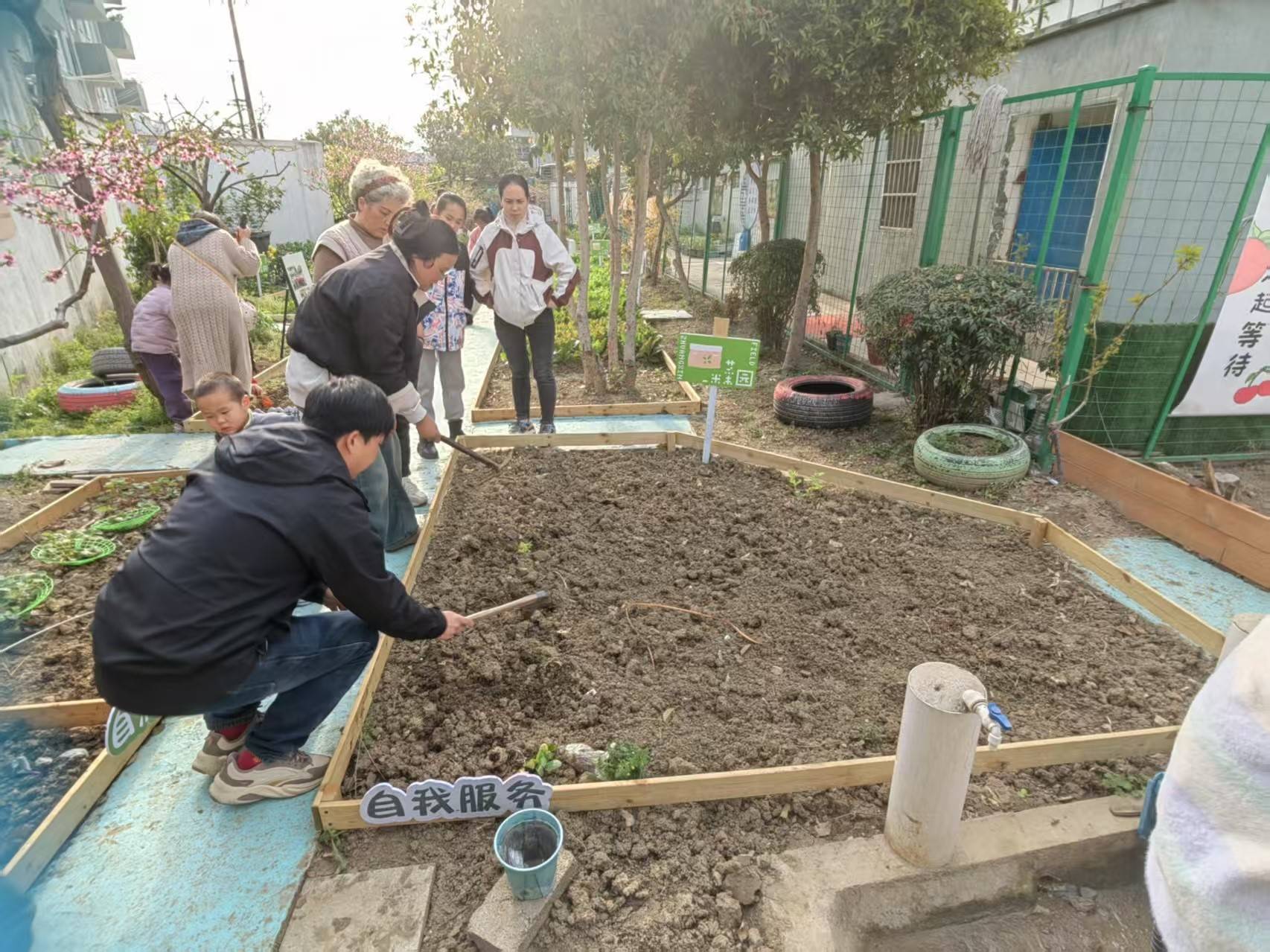
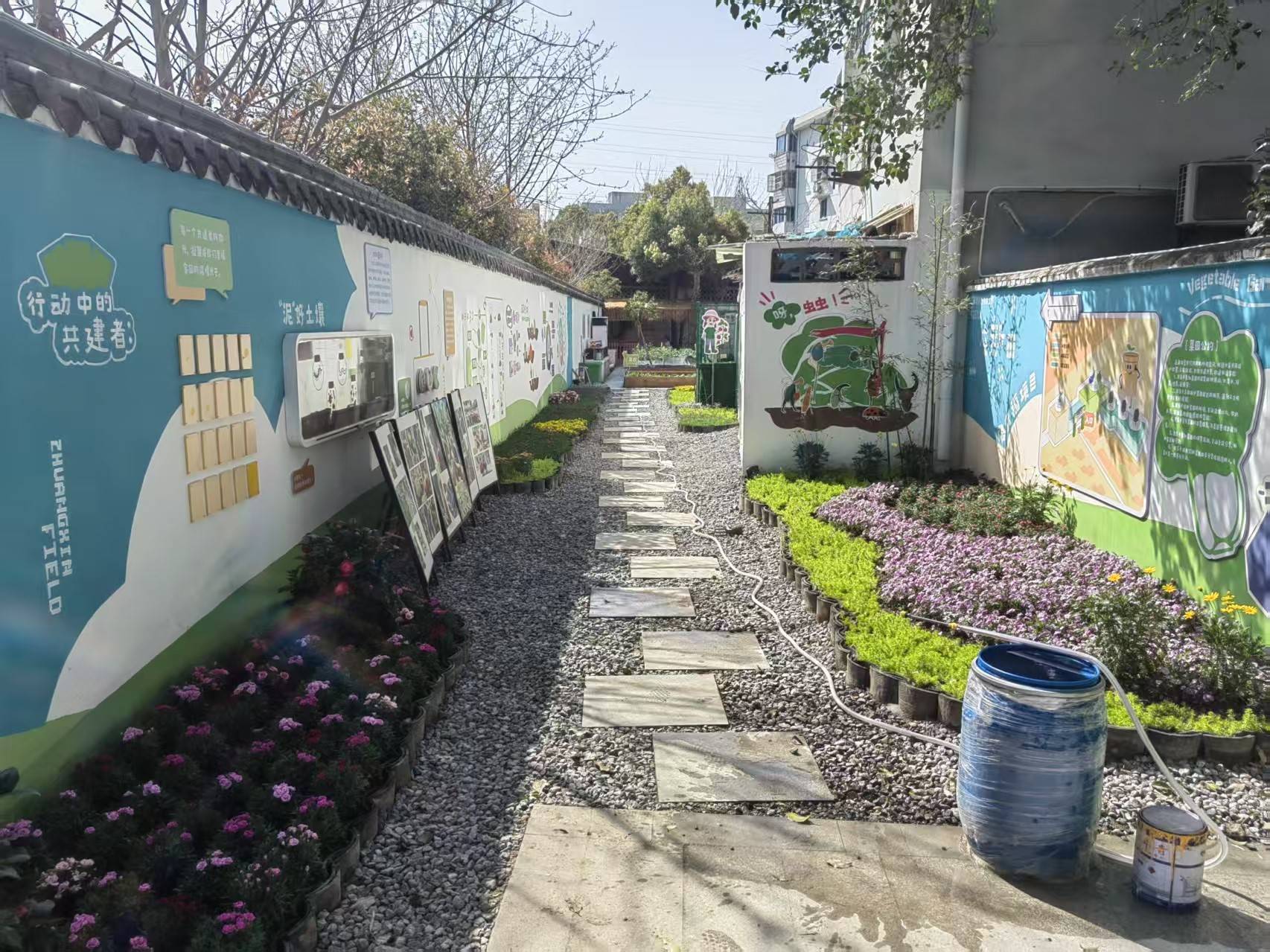
The farm is divided into over a dozen "One Meter
Farmlands" and a fruit tree area, where more than 20 kinds of vegetables
and fruits are grown. Each plant has its own information sign. The roads have
been repaved, walkways have been built, irrigation facilities have been
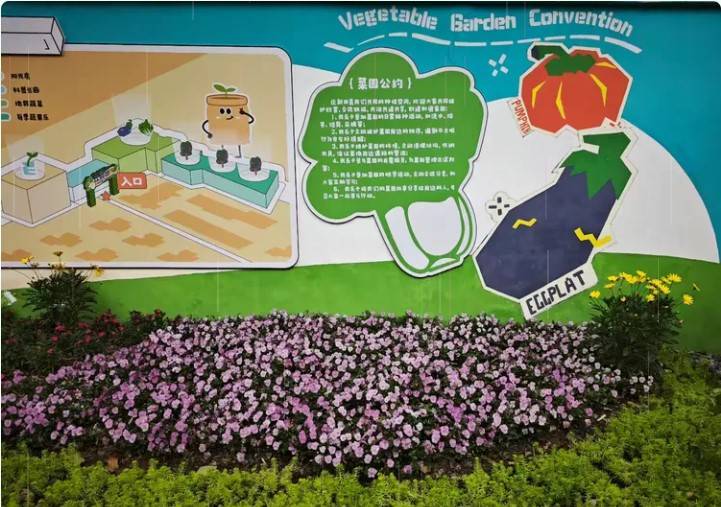
reinstalled, and the newly installed entrance is also very interesting. One
side of the wall has been decorated with various agricultural knowledge display
boards. Besides the "hard environment", the "soft
environment" is also emphasized: the project invites students from local
primary and secondary schools and children from the community to participate in
immersive planting experience classes. Experienced farmers and school teachers
give lessons through tea parties and painting classes, discussing the
importance of agriculture and depicting its beauty. This allows children to
experience the joy of labor, understand the value of food, and develop the
habit of saving and living a low-carbon life.
园内划分出十几片“一米农田”及果树区,种植20多种蔬菜和水果,每种植物都配有专属信息标识牌;道路重新硬化并修建步道,铺排浇灌用水设备,新安装的门头趣味十足,一侧墙面布置农耕知识展板。项目注重“软环境”打造,邀请辖区中小学学生、社区孩子开展“沉浸式”种植体验课,由经验丰富的老农和学校名师授课,通过茶话会、绘画课等形式“话”说农种事、“画”说农种美,让孩子们体验劳动快乐、感悟食物来之不易,养成节约低碳的生活习惯。

Company/Organization Profile
机构简介
Zhanjiang Sub-district is a sub-district under Liangxi District,
Wuxi City, Jiangsu Province. It is located in the northern part of Liangxi
District and was established in November 2021. It is named after the main road
in its jurisdiction, Zhanjiang Overpass. It covers an area of 6.8 square
kilometers and has a resident population of approximately 92,000 (as of October
2021).
瞻江街道是江苏省无锡市梁溪区下辖街道,位于梁溪区北部,成立于2021年11月,因辖区主干道瞻江立交得名,面积6.8平方公里,截至2021年10月常住人口约9.2万人。
Zhanjiang Sub-district focuses on economic development and
improvement of people's livelihood. Its industrial focus is on digital economy
and artificial intelligence, promoting municipal projects such as the Wuxi
Artificial Intelligence Collaborative Innovation Base. Zhanjiang Sub-district
aims for the integrated development of science, industry, city and people, and
is committed to building a modern urban area that is suitable for living,
working and innovation.
瞻江街道聚力经济建设与民生发展,聚焦数字经济与人工智能产业,推进无锡人工智能协同创新基地等市级项目,以“科产城人”融合发展为目标,致力于打造宜居宜业宜创新的现代化城区。
Project Outcome
项目成果
1. The effect of reducing carbon emissions and increasing carbon
sinks is significant: by transforming wasteland into farmland and planting more
than 20 types of vegetables and fruits, the project effectively absorbs carbon
dioxide and promotes the increase of carbon sinks. Adopting an ecological
planting method of physical deworming and minimal use of chemical fertilizers
to further reduce carbon emissions.
减碳增汇效果显著:通过荒地改造为农田,种植20多种蔬菜水果,有效吸收二氧化碳、促进碳汇增加;采用物理驱虫、少用化肥的生态种植方式,进一步降低碳排放。
2. Waste and pollutant reduction: Clean up weeds and invasive
alien species (such as Canadian goldenrod), reduce the use of chemical
pesticides, and lower the risk of soil and water pollution. The packaging of
harvested vegetables is made of environmentally friendly materials to reduce
the generation of plastic waste.
废弃物与污染物减少:清理荒草和外来入侵物种,减少化学农药使用,降低土壤和水体污染风险;收获的蔬菜采用环保材料包装,减少塑料废弃物产生。
3. Outstanding social benefits: The project has linked
communities, schools, and enterprises, and has held more than 10 activities
such as spring broadcasting ceremonies and agricultural fun classes, attracting
over 500 participants, of which 60% are students. After the vegetables mature,
they are distributed to special groups such as elderly people living alone,
benefiting more than 200 households.
社会效益突出:联动社区、学校及企业,累计举办春播仪式、农趣课堂等活动10余场,吸引超500人次参与(学生占比60%);蔬菜成熟后分发给孤寡老人等特殊群体,惠及200余户家庭。
4. Improvement of environment and quality of life: hardening
roads, improving irrigation facilities, and enhancing local microclimate;
Agricultural knowledge exhibition boards and interactive courses promote
ecological concepts, significantly enhancing residents' low-carbon awareness.
环境与生活质量提升:硬化道路、完善灌溉设施,改善局域微气候;通过农耕知识展板与互动课程普及生态理念,居民低碳意识显著增强。
5. Cost saving and sustainable model: adopting "enterprise
claim+diversified linkage" management to reduce operation and maintenance
costs; It is expected that version 2.0 will expand the "vegetable
garden+" economy, and the annual revenue can be used to contribute to the
community environmental protection fund.
成本节约与可持续模式:采用“企业认领+多元联动”管理,降低运维成本;预计2.0版本将拓展“菜园+”经济,年收益可反哺社区环保基金。
Project Highlights
项目亮点
This project adopts a public welfare management model of
"diversified linkage+enterprise claim", further building a
collaborative mechanism for the harmonious development of schools, families,
and communities, and turning the small vegetable garden into a practical base
for popularizing the "dual carbon" theory. Received the Wuxi
"Micro Happiness" Livelihood Project Award in 2023 and a special
report from the Jiangsu Provincial Department of Ecology and Environment in
2024.
项目采用“多元联动+企业认领”的公益性经营服务管理模式,构建学校、家庭、社区和谐发展的协同机制,将菜园打造成普及“双碳”理论的实践基地。2023年获得无锡市“微幸福”民生工程奖,2024年获江苏省生态环境厅专题报道。
Project Implementation
项目实施
1. Reasonable design and scientific planning: The park is designed to be divided into vegetable planting area, fruit tree planting area, and science popularization practice area, each of which is equipped with an independent sink and irrigation device. At present, peach trees, plum trees, pipa trees, orange trees, hawthorn trees and other fruit trees have been planted in the park. Some crops suitable for spring growth have also been sown in advance, such as chicken feather vegetables, coriander, lettuce, spinach, tomatoes and other vegetables. At the same time, various areas such as insect hotels, science popularization corridors, and achievement exhibitions are also being set up in the park.
合理设计、科学规划:园内分为蔬菜种植区、果树栽种区、科普实践区,每块区域均设有独立洗手池和灌溉装置。目前已栽种桃树、李树等多种果树,播种鸡毛菜、香菜等春季农作物,同时正在设置昆虫旅馆、科普长廊、成果展示等区域。
2. Diversified linkage and collaborative governance 1.
Social Citizen Collaboration: In terms of planting, we fully listen to
residents' opinions and suggestions, and mobilize Wuxi's good person Cai
Dingfeng and other experienced old residents as our volunteers to participate
in the daily management and maintenance of the vegetable garden. The number of
volunteer participants throughout the year exceeded 800. The first phase of the
Family Partner Program will be launched in 2025, and 20 families have adopted
and participated in daily management, synchronously providing support to
elderly people in extreme poverty, subsistence allowance, and loneliness.
多元联动,聚力共治1. 社民联动:种植方面充分听取居民意见,发动无锡好人蔡定峰及有经验的老居民作为志愿者参与菜园日常管理维护,全年志愿者参与人次超800;2025年启用第一期家庭合伙人计划,20户家庭认养并参与日常管理,同步反哺特困、低保、孤寡等老人。
3. School community linkage: Cooperate with Liutan
Experimental Primary School to create an off campus labor practice base for
students. The school leads students to work in the contracted area every week,
planting crops that grow in all seasons in the fields, allowing students to
learn about farming knowledge while getting close to nature, experiencing the
joy of labor, and realizing the hard won nature of food. Through practice,
students can "educate" people and speak about farming through
"words" and "paintings", further deepening their spiritual
and cultural connotations.
校社联动:与刘潭实验小学合作打造校外劳动实践基地,学校每周带领学生到包干区域劳作,种植四季农作物,让学生在学习农种知识的同时亲近自然、体验劳动快乐、感悟食物来之不易,以实践“育”人,通过“话”说农种事、“画”说农种美,深化精神文化内涵。
4. Party Building Alliance: In order to further stimulate the
participation of social resources in governance, party building alliance units
are mobilized to claim "funding". The claim fee for each square meter
of vegetable field is 800 yuan per year. Currently, 14 party building alliance
units have claimed it,and a portion of the
public welfare funds obtained are used for seed procurement, watering fees,
organic fertilizers, and agricultural tools. Another department is used for the
design and production of science popularization manuals and cultural and
creative products. Through the "Love Enterprise Claim" public welfare
business service model, the project can effectively and continuously operate.
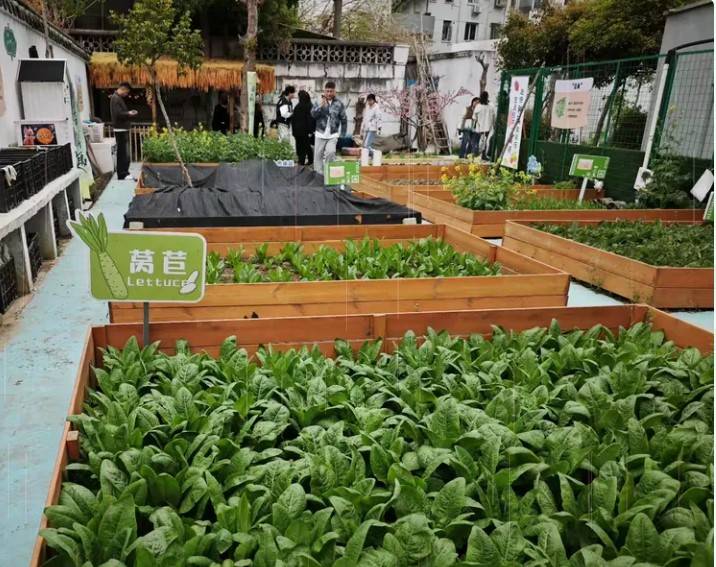
More than 500 kilograms of lettuce have been harvested by 2025.
党建联盟:发动党建联盟单位认领“注资”,每平米菜地年认领金800元,目前已有14家单位认领;所得公益金部分用于种子采购、水费、有机肥等支出,部分用于科普手册及文创产品设计制作,通过“爱心企业认领”的公益经营性服务模式保障项目持续运营,2025年已收获莴苣500余斤。
5. Version 2.0, further upgraded functionality 1.
Vegetable Garden+Practice: One is the emotional practice of residents,
providing farming sites for elderly people who love to grow vegetables in the
jurisdiction. It can serve as a daily volunteer for management and help the
elderly regain their experience of planting vegetables; The second is the
outdoor labor practice of students, which puts a lot of academic pressure and hones
their physical and mental health through labor. Therefore, the school has
launched "agricultural mathematics classes, vegetable garden aesthetic
education classes, farmland life classes, and respect for the elderly and moral
education classes" in the vegetable garden, combining learning and
enjoyment.
版本2.0,功能再升级1. 菜园+实践:为辖区种菜爱好老人提供农作场地,既让其担任管理志愿者,又帮助找回种菜情怀;为学生提供户外劳作实践,缓解课业压力、磨炼身心健康,学校在菜园开展“农耕数学课、菜园美育课”等,实现学与乐并行。
6. Vegetable Garden+Science Popularization: Carry out science
popularization activities with different themes in the vegetable garden, such
as "The Secrets of Soil", focusing on in-depth knowledge of soil
properties, acidity, color, softness, and other aspects. "Enjoy Every
Season's Vegetables and Fruits", popularize the characteristics of
different vegetable and fruit planting based on different agricultural crops in
each season, "The Life of Plants", and conduct science popularization
throughout the entire life cycle of vegetables and fruits planted in the
vegetable garden, including seeds, germination, flowering, and fruiting.
菜园+科普:开展“土壤的秘密”“每季蔬果乐”“植物的生命”等不同主题科普活动,围绕土壤特性、蔬果种植特性、植物全生命周期等进行深入科普。
7. Vegetable Garden+Cultural and Creative: Combining the
trendy cultural and creative activities that young people enjoy nowadays, we
invite students, local residents, and members of alliance units to design
cultural and creative products based on vegetable gardens, such as vegetable
garden postcards, pillows, graffiti manuals, DIY handkerchiefs, and more. These
products will be sold for charity, and the public welfare funds will be used to
support the daily operation of the vegetable garden and reward outstanding
volunteers and designers.
菜园+文创:邀请学生、辖区居民及联盟单位人员,以菜园蔬果为原型设计明信片、抱枕、涂鸦手册等文创产品并义卖,所得公益金用于菜园日常运营及奖励优秀志愿者和设计者。
8. Comparison Before and After Implementation: Before
implementation, the land was abandoned, overgrown with weeds, invaded by alien
species, and affected the local environment; After implementation, it was
transformed into an ecological farm with complete facilities, realizing
ecological restoration, carbon reduction and carbon sink increase, and becoming
a comprehensive space integrating planting, science popularization, and public
welfare, which improved the living environment and residents' sense of gain.
实施前后对比:实施前,该地块为荒地,杂草丛生、外来物种入侵,影响局域环境;实施后,改造为设施完善的生态农场,实现生态修复与减碳增汇,成为集种植、科普、公益于一体的综合空间,改善了居住环境,提升了居民获得感。
Project Impact & Sustainability
项目影响力、可推广性与可持续性
This project leverages the big ecology through the "small
vegetable garden", which combines environmental restoration, social
services, and educational functions. 1. Implemented ecological restoration and
carbon reduction practices in wasteland. Transforming 1000 square meters of
wasteland into farmland, removing invasive alien species, planting more than 20
types of vegetables and fruits, and significantly enhancing carbon
sequestration capacity and improving local microclimate through green planting
methods such as physical pest control and minimal use of chemical fertilizers.
项目通过“小菜园”撬动大生态,兼具环境修复、社会服务与教育功能。一是实现荒地生态修复与减碳实践,将1000平方米荒地改造为农田,清除外来入侵物种,种植20余种蔬菜水果,通过绿色种植方式显著提升碳汇能力、改善局域微气候。
2. Carry out immersive science popularization and community
mobilization. Collaborate with schools to launch 'Agricultural Fun Classroom',
organize students to participate in planting experiences, promote low-carbon
concepts through agricultural knowledge exhibition boards, painting classes,
and other forms, attracting over 500 participants, of which 60% are primary and
secondary school students.
二是开展沉浸式科普与社区动员,联动学校开展“农趣课堂”,组织学生参与种植体验,通过多种形式普及低碳理念,累计吸引超500人次参与,其中60%为中小学生。
3. It embodies public welfare mutual assistance and care for
vulnerable groups. After the vegetables are ripe, volunteers sort and package
them, and donate them to more than 200 households including elderly and
disabled residents, achieving the dual benefits of "green output+community
mutual assistance".
三是体现公益互助与弱势群体关怀,蔬菜成熟后由志愿者分拣包装,定向赠予200余户特殊家庭,实现“绿色产出+社区互助”双效益。
4. We have achieved a sustainable model of government enterprise
social collaboration. Adopting a "community planning+enterprise
claim" management mechanism to reduce operation and maintenance costs; The
2.0 version of the plan will expand the "vegetable garden+" economy,
with profits benefiting the community environmental protection fund and forming
a long-term cycle.
四是实现政企社协同的可持续模式,采用“社区策划+企业认领”管理机制降低运维成本,规划2.0版本拓展“菜园+”经济,收益反哺社区环保基金,形成长效循环。
5. It has urban spatial revitalization and educational value.
Harden roads, improve irrigation facilities, and create a "Tong Le Nong
Fun Park" that combines production and leisure functions, becoming a
practical base for promoting ecological civilization in urban areas.
五是具有城市空间活化与教育价值,硬化道路、完善灌溉设施,打造兼具生产与休闲功能的“童乐农趣园”,成为城区内普及生态文明思想的实践基地。
(Using AI translation)
(使用AI翻译)
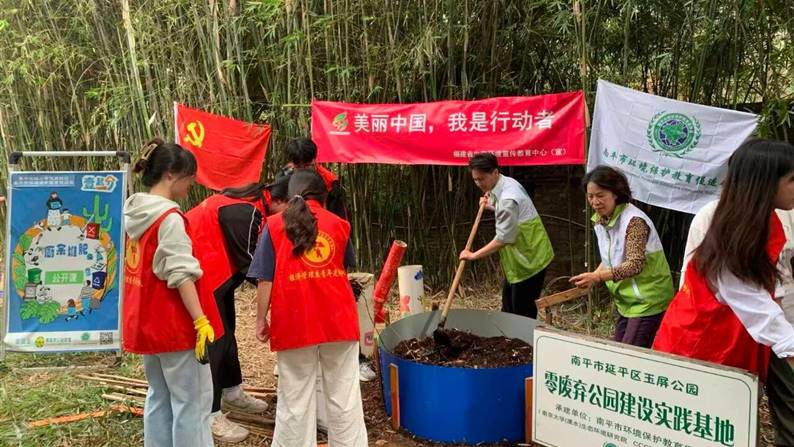
南平零废弃建设等案例,在联合国COP30大会上向全球发布!
12-04 · 来源:福建南平环境 · 作者:福建南平环境

上海市第六人民医院入选《2025美丽中国 · 绿色空间使用者典型案例集》
12-04 · 来源:徐汇生态环境 · 作者:徐汇生态环境
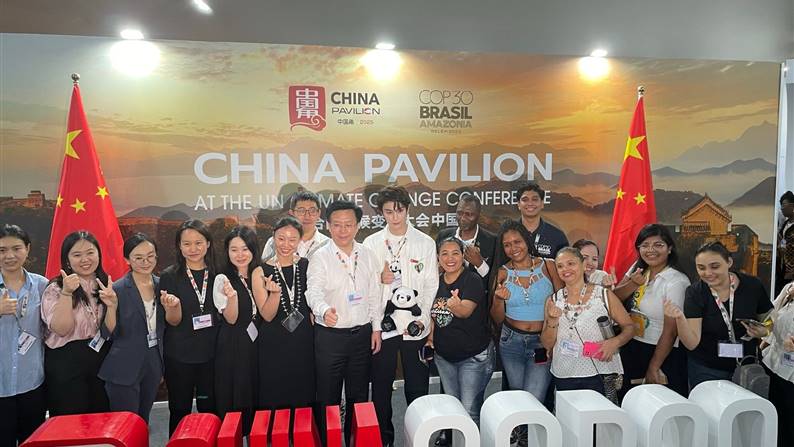
当青年演员/联合国新闻特派员走进COP30🌍
11-27 · 来源:DGUS · 作者:DGUS
