

Project Overview
案例概述
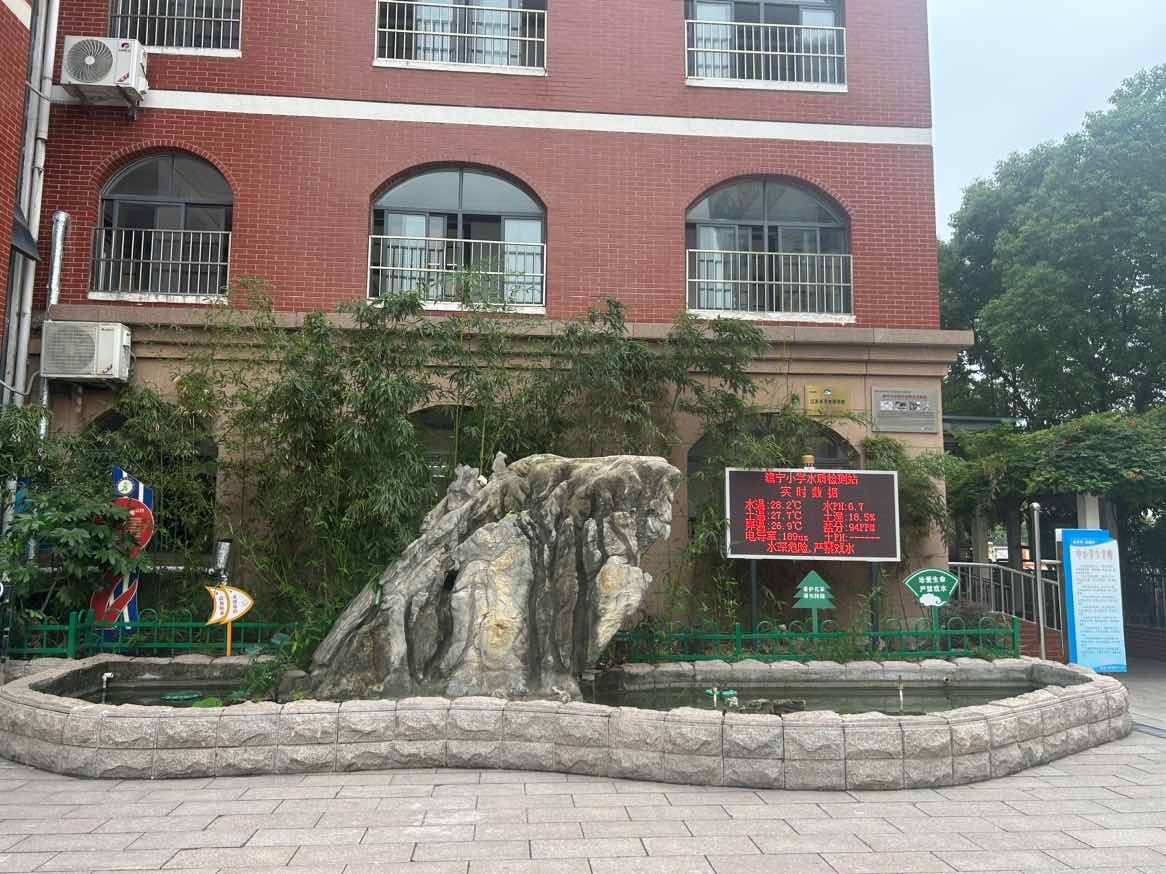
1. Since September
2023, the Environmental Protection Club and the Technology Club of our school
have collaborated to conduct a two-year research on the rainwater harvesting
ecosystem on campus. The initiative aims to improve the utilization rate of
rainwater on campus, conserve resources, and promote environmental protection
concepts.
我校环保社团与科技社团合作,自2023年9月开始在校内开展为期2年的雨水回收生态系统研究,旨在提高校园雨水利用率,节约资源并推广环保理念。
2. In the early
stage of the project, inspired by the observation of the governance
achievements of the Yudai River, two teams were formed to design the rainwater
harvesting system and the energy-saving power supply system respectively. The
integrated system consists of two major modules: power supply (wind energy,
solar energy, and backup electricity) and rainwater harvesting (collection,
irrigation, fishpond ecology, rockery fountain, and sensor control).
项目前期受玉带河治理成果启发,组建两支队伍分别设计雨水回收系统与节能供能系统。集成系统含两大模块:供能(风力、太阳能、备用电能)和雨水回收(收集、浇灌、鱼池生态、假山喷泉及传感器控制)。
3. It uses
photovoltaic panels and wind energy for power supply, and combines sprinkler
and drip irrigation methods to achieve remote control. Through preliminary
investigations, scheme design and demonstration, model construction, and
experimental testing and improvement, the project was finally put into
practice.
系统利用光伏板、风能供电,结合喷洒与滴灌方式,实现远程控制,经前期调查、方案设计论证、搭建模型、实验测试完善后最终落地。
4. The project has
achieved remarkable results: it can save 500 tons of water and 400 kWh of
electricity every year. The collected and treated rainwater is used for
irrigation, fishpond ecological circulation, and other purposes, and sensors
enable automatic control.
成果显著,每年可节约用水500吨、用电400度,雨水经收集处理后用于浇灌、鱼池生态循环等,传感器实现自动控制。
5. In addition, the
project has enhanced students' awareness of environmental protection and
technological literacy, and driven water conservation in their families. It has
been recognized by the school, becoming a model of the integration of
technology and ecological environmental protection, and promoting the
environmental protection development of the campus and its surrounding areas.
项目提升学生环保与科技素养,带动家庭节水,获校方认可,成为科技与生态环保结合的典范,推动校园及周边环保建设。
Company/Organization Profile
机构简介
1. Jianning Primary
School of Lianyungang City, founded in 1994, is a provincial experimental
primary school and a provincial-level civilized campus.
连云港市建宁小学始建于1994年,是省实验小学、省文明校园。
2. With the
educational goal of cultivating “people who develop in an all-round way and
grow up healthily”, the school focuses on the construction of two major
projects: the “ecological” characteristic culture and the cultivation of the
“integrity” character.
学校以实现“全面发展健康成长的人”为育人目标,聚焦“生态”特色文化和“诚信”品格培塑两大工程建设。
3. Gradually, it
has formed a humanistic foundation guided by “integrity” education and
“ecological” education. “Ecological Campus”, “Digital Campus”, “Integrity
Campus”, “Art Campus”, “Scholarly Campus” and “Open Campus” have become bright
business cards of the school.
逐渐形成以“诚信”教育和“生态”教育为文化引领的人文底蕴,“生态校园”“数字校园”“诚信校园”“艺术校园”“书香校园”“开放校园”成为学校的亮丽名片。
Project Outcome
项目成果
1. Every year, it
can save 500 tons of water and 400 kilowatt-hours (kWh) of electricity. After
collection and treatment, the rainwater is used for irrigation, fishpond
ecological circulation, and other purposes, with sensors enabling automatic
control.
每年可节约用水500吨、用电400度,雨水经收集处理后用于浇灌、鱼池生态循环等,传感器实现自动控制。
2. Additionally,
the project has improved students' environmental protection awareness and
scientific-technological literacy, driven water conservation in families, and
gained recognition from the school.
项目提升学生环保与科技素养,带动家庭节水,获校方认可。
3. It has become a
model of integrating technology with ecological environmental protection,
promoting environmental protection efforts on campus and in its surrounding
areas.
成为科技与生态环保结合的典范,推动校园及周边环保建设。
Project Highlights
项目亮点
1. We designed a
rainwater harvesting ecosystem based on the actual conditions of our school. To
improve the utilization rate of the school’s rainwater harvesting system and
make full use of rainwater for irrigating the campus flowers, grass, and trees,
we also adopted a combination of sprinkler irrigation and drip irrigation
methods to maximize water conservation.
根据学校实际情况设计雨水回收生态系统,提高雨水回收系统利用率,充分利用雨水浇灌校园花草树木,采用喷洒浇灌与滴灌相结合的方法,力争节约用水。
2. This system can
save approximately 500 tons of water and 400 kilowatt-hours (kWh) of
electricity every year.
该系统每年能节约用水约500吨、节约用电约400度。
Project Implementation
项目实施
1. Implementation
Process of the Project - 1. Preliminary Investigation: Led by teachers, our
team inspected the Yudai River—the main urban river adjacent to our school. A
few years ago, due to inadequate management, the river surface was severely
polluted, the water was extremely turbid, and even fish and shrimp could not
survive.
项目实施过程 - 1. 前期调查:在老师带领下,团队考察紧邻学校的城区主河流玉带河。前几年因疏于管理,河面污染严重、河水浑浊,鱼虾无法生存。
2. In recent years,
our school has established a "Special Environmental Protection Team for
Yudai River Protection." The team conducts regular patrols to fish out
garbage from the river surface, collects water samples, and has also invited
experts to assist in river management. Through unremitting efforts, the water
quality of the Yudai River has been greatly improved, and we are delighted to
see more and more angling enthusiasts by the riverbank.
近年来,学校成立“保护玉带河专项环保小分队”,定期巡查打捞河面垃圾、取水样,并请专家协助治理,经不懈努力,玉带河水质大幅改善,河边垂钓爱好者日益增多。
3. Inspired by
this, my classmates and I came up with a bold idea: if the river water can be
treated, can rainwater be reused? Can we design a rainwater harvesting and
ecological system? We then consulted teachers and classmates to gather their
suggestions.
受此事鼓舞,同学们大胆设想雨水能否再利用、能否设计雨水回收生态系统,随后访问老师和同学收集建议。
4. Scheme
Design: Based on our investigation, discussions, and the actual conditions of
the school, we aimed to improve the utilization rate of the school’s rainwater
harvesting system and make full use of rainwater for irrigating the campus
flowers, grass, and trees. We adopted a combination of sprinkler irrigation and
drip irrigation to maximize water conservation.
设计方案:根据调查讨论及学校实际情况,为提高雨水回收系统利用率,充分利用雨水浇灌校园绿植,采用喷洒浇灌与滴灌相结合的方法节约用水。
5. Meanwhile, we
used solar photovoltaic panels and wind energy to generate electricity, which
provides power for lighting and irrigation—achieving environmental
friendliness—and the system can also be remotely controlled. This project
enables more students to pay attention to ecological and environmental
protection, and understand how the integration of technology and ecological
environmental protection under the IoT condition brings convenience to our
lives.
同时利用太阳光伏板和风能发电,为亮化和浇灌提供电源,实现绿色环保且可远程控制,让更多同学关注生态环保,了解物联网条件下科技与生态环保结合带来的生活便利。
6. We formed two
teams: one team was responsible for designing the rainwater harvesting
ecological system (the original rainwater harvesting group); the other team
focused on designing the energy-saving power supply system. According to our
design, the renovated campus rainwater harvesting and utilization ecological
system can save approximately 500 tons of water and 400 kilowatt-hours (kWh) of
electricity every year.
组建两支队伍,一支设计雨水回收生态系统(原雨水回收组),另一支设计节能供能系统,经设计的校园雨水回收利用生态系统每年可节约用水约500吨、节约用电约400度。
7. To finalize the
ecological system design scheme, we consulted the school principal, classmates,
and teachers again, conducted repeated demonstrations, and confirmed the final
plan.
再次访问校长、同学和老师,反复论证生态系统设计方案,确定最终方案。
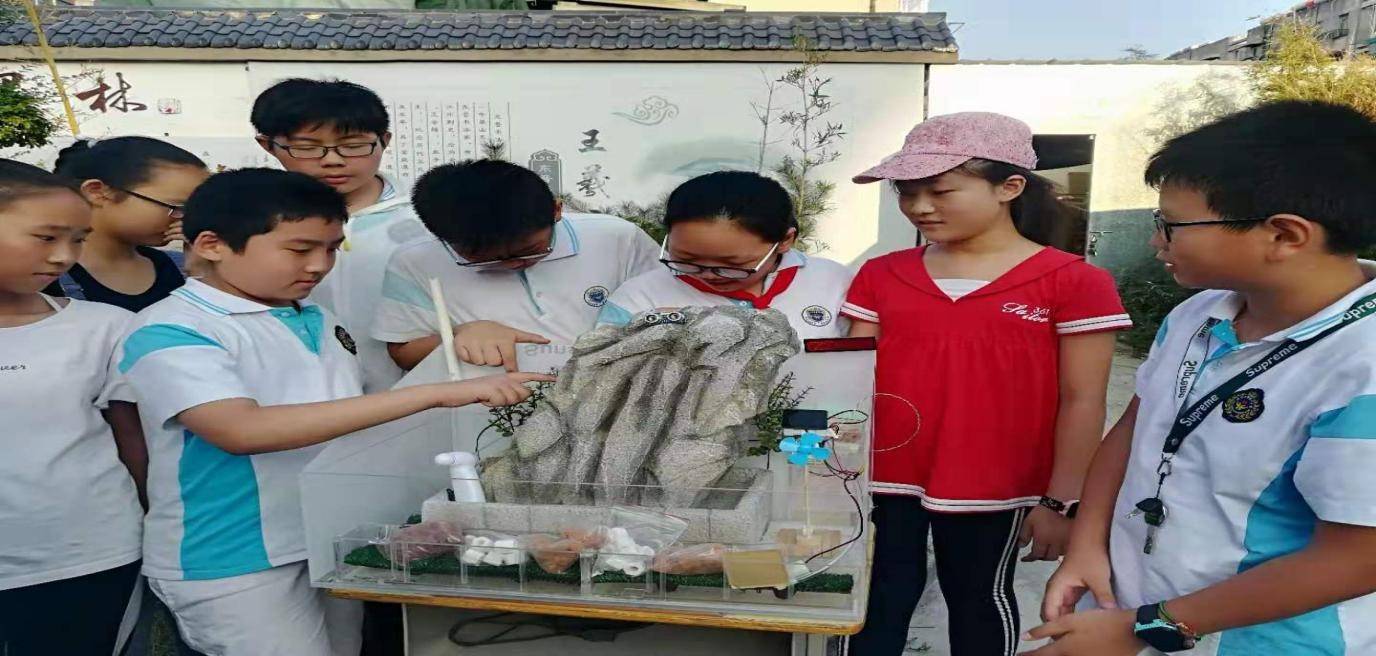
8. Model
Construction: In accordance with the design scheme, we listed the required
equipment and materials, and learned technical knowledge from teachers.
搭建模型:根据设计方案列出所需器材材料,向老师学习技术知识。
9. Experimental
Testing: We carried out experimental tests using the constructed model and made
continuous modifications to optimize it.
实验测试:利用搭建好的模型进行实验测试,不断修改优化。
10. Summary
Compilation: Based on all the work done in the previous stages, we started
compiling the summary and invited our supervising teachers to provide revisions
and assistance.
撰写总结:根据前期工作开始总结,并请指导老师给予修改和帮助。
11. Usage of Funds
and Consumables: A total of 4,000 yuan was spent on purchasing equipment and
materials, including equipment, wires, model flowers and plants, acrylic
sheets, glue, small water pumps, drip irrigation emitters, drip irrigation
tubes, rockery models, LED colored lights, photovoltaic panels, a set of wind
power generation equipment, speakers, power amplifiers, human infrared sensors,
etc.
经费及耗材使用情况:购买器材材料花费4000元,含器材、电线、模型花草、亚克力板、胶、小水泵、滴灌头、滴灌管、假山模型、LED彩灯、光伏板、风力发电一套、喇叭、功放器、人体红外传感器等。
12. Comparison
Before and After Implementation: Before implementation, rainwater on campus was
wasted, and irrigation relied on tap water with high energy consumption; after
implementation, the rainwater harvesting ecosystem realizes rainwater
recycling, reduces tap water consumption and electricity usage, and creates an ecological
and ornamental campus environment.
实施前后对比:实施前,校园雨水浪费严重,浇灌依赖自来水,能耗较高;实施后,雨水回收生态系统实现雨水循环利用,减少自来水消耗和用电用量,打造出兼具生态性与观赏性的校园环境。
13. Challenges and
Support: The main challenge was the lack of technical experience in system
design and model construction, which was solved by consulting teachers and
experts and conducting repeated experiments. The school provided funding
support and venue resources, and teachers offered professional guidance to
ensure the smooth implementation of the project.
挑战与支持:主要挑战为系统设计和模型搭建缺乏技术经验,通过咨询老师和专家、反复实验解决;学校提供经费支持和场地资源,老师给予专业指导,保障项目顺利实施。
Project Impact & Sustainability
项目影响力、可推广性与可持续性
1. This project at
our school can not only collect rainwater efficiently, significantly reduce the
waste of natural precipitation, and replace tap water in scenarios such as
irrigation and landscape water replenishment, thereby markedly cutting down tap
water consumption.
我校该项目既能高效收集雨水,大幅减少自然降水浪费,替代自来水用于浇灌、景观补水等场景,显著降低自来水消耗。
2. Moreover,
relying on the fish pond ecosystem and green plant landscapes, it can purify
the local air, regulate the microclimate, and create an environment that
combines ornamental value with ecological benefits. Meanwhile, it provides a
vivid practical scenario for the school to carry out Internet of Things (IoT)
technology teaching and for the community to popularize environmental
protection knowledge, contributing to the spread of green concepts.
又能依托鱼池生态与绿植景观,净化局部空气、调节小气候,打造兼具观赏性与生态性的环境,同时为学校开展物联网技术教学、社区普及环保知识提供鲜活实践场景,助力绿色理念传播。
3. In terms of
promotability, the project is composed of modular components. Wind power, solar
energy, and other energy sources can adapt to different climates, and modules
such as collection and irrigation can be adjusted according to needs. It is
suitable for various scenarios including campuses, communities, and industrial
parks, with controllable costs and easy implementation.
可推广性方面,项目由模块化组件构成,风力、太阳能等能源能适配不同气候,收集、浇灌等模块可按需调整,适用于校园、社区、园区等多种场景,成本可控且易落地。
4. In terms of
sustainability, the power supply from clean energy greatly reduces long-term
operation energy consumption and costs. The
"collection-storage-utilization-circulation" of rainwater forms a
complete ecological closed loop.
可持续性上,清洁能源供电大幅降低长期运行能耗与成本,雨水“收集-存储-利用-循环”形成完整生态闭环。
5. Sensors for
humidity, pressure, etc., realize fully automatic control, reducing manual
inspection and operation, and the maintenance process is simple. It fully
conforms to the concept of green and low-carbon development and has the ability
of long-term stable operation.
湿度、压力等传感器实现全自动控制,减少人工巡检与操作,维护流程简便,完全契合绿色低碳发展理念,具备长期稳定运营的能力。
南平零废弃建设等案例,在联合国COP30大会上向全球发布!
12-04 · 来源:福建南平环境 · 作者:福建南平环境

上海市第六人民医院入选《2025美丽中国 · 绿色空间使用者典型案例集》
12-04 · 来源:徐汇生态环境 · 作者:徐汇生态环境
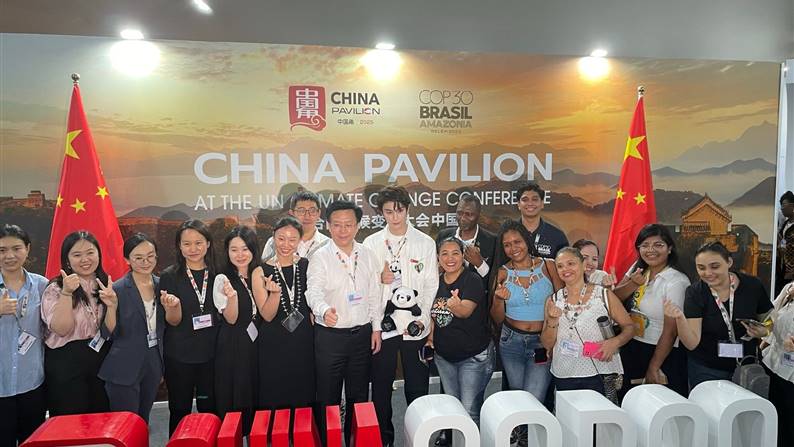
当青年演员/联合国新闻特派员走进COP30🌍
11-27 · 来源:DGUS · 作者:DGUS
